For years, SEO content optimization was often reduced to a simple formula:
Find a keyword. Put it in the title. Add it to the H1. Repeat it throughout the page. Add variations. Include it in a few headings. Check the keyword density. Publish.
That approach was never a particularly good way to create useful content, and in the era of Google AI Overviews, it makes even less sense.
Today’s search systems are much better at understanding topics, context, relationships, questions, and user intent.
At the same time, users aren’t always searching with short keyword phrases anymore.
Instead of searching:
“SEO agency USA”
someone might ask:
“How do I choose an SEO agency for a B2B company in the United States?”
Or:
“How much should a small business spend on SEO every month?”
Or:
“Is SEO still worth investing in when Google AI Overviews answer questions directly?”
These searches are different.
They’re questions.
They’re conversational.
They contain context.
And they often require more than a page that simply repeats the target keyword.
Google’s own Search Essentials recommends creating helpful, reliable, people-first content while still using the words people search for in prominent places such as titles and main headings. Google also explicitly classifies unnatural repetition of words or phrases intended to manipulate rankings as keyword stuffing.
So the answer isn’t to stop using keywords.
The answer is to understand what keywords are actually for.
At MetaSense Marketing, our approach is straightforward:
Use keywords to understand how your audience searches. Use content to answer what your audience actually needs.
That’s the difference between keyword optimization and keyword stuffing.
And it’s an important distinction when optimizing for AI Overviews.
Keyword stuffing is the excessive or unnatural use of keywords with the intention of influencing search visibility.
Google defines keyword stuffing as filling a page with keywords or numbers in an attempt to manipulate rankings, including repeating words or phrases so frequently that the writing sounds unnatural. Google’s spam policies now explicitly apply to attempts to manipulate generative AI responses in Google Search as well.
For example, imagine you’re optimizing a page for:
Healthcare staffing agency
A keyword-stuffed paragraph could look like this:
If you’re looking for a healthcare staffing agency, our healthcare staffing agency provides healthcare staffing agency services to businesses looking for the best healthcare staffing agency.
Nobody wants to read that.
A natural version might say:
Healthcare organizations need staffing partners that understand clinical requirements, candidate screening, workforce shortages, compliance, and the urgency involved in filling critical positions.
The second paragraph doesn’t abandon SEO.
It actually provides more context about the topic.
It introduces relevant concepts such as:
This is the difference between repeatedly using a keyword and building semantic relevance around a subject.
No legitimate SEO strategy should depend on it.
In fact, keyword stuffing can work against the broader objective of creating helpful, trustworthy content.
Google’s spam policies apply not only to traditional web results but also to attempts to manipulate generative AI responses in Google Search.
Google’s 2026 Search documentation also specifically added guidance for optimizing content for generative AI features. The update emphasized non-commodity content, existing SEO best practices, and addressed common AEO/GEO misconceptions rather than introducing an entirely separate optimization system.
The practical takeaway is important:
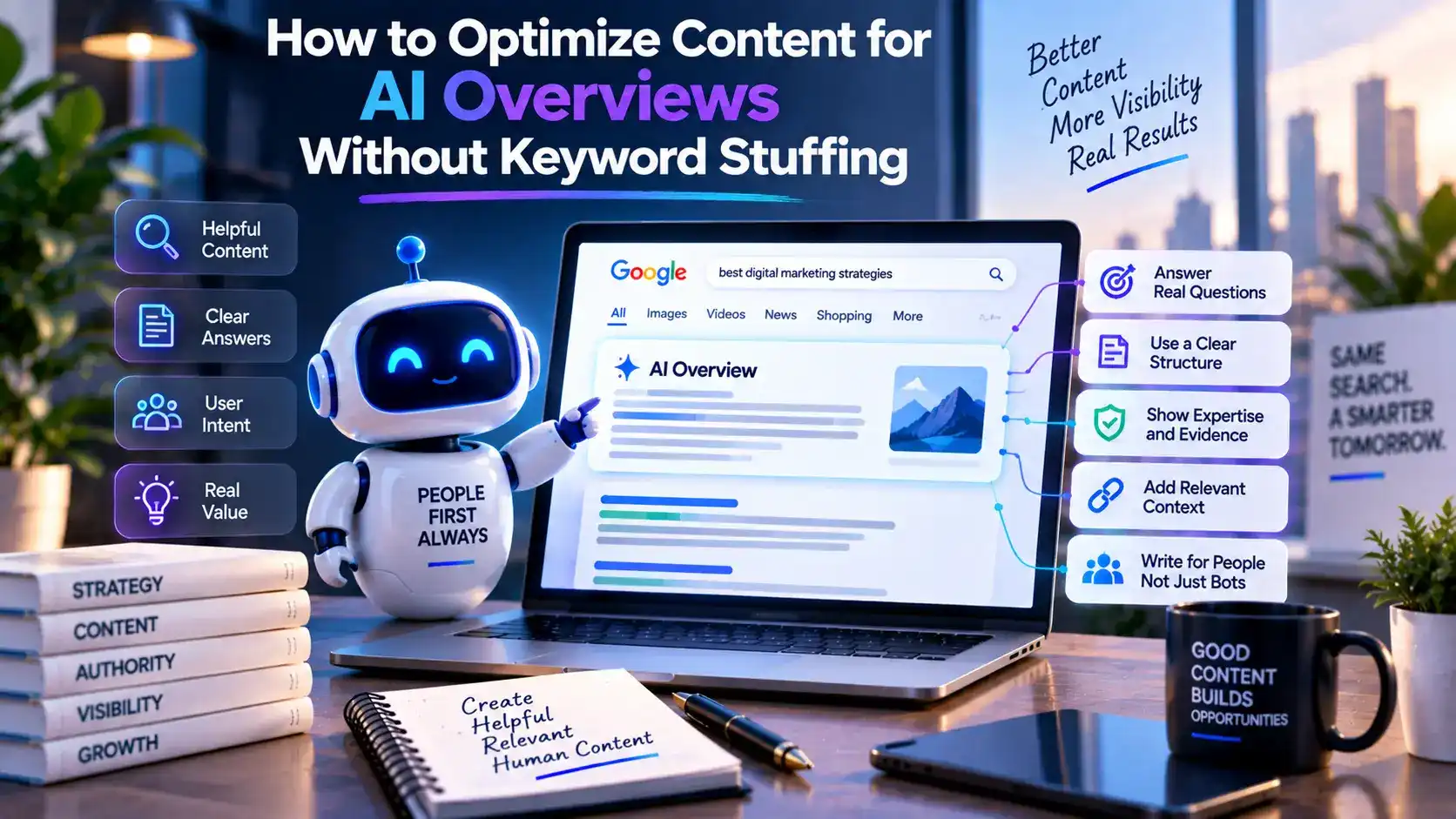
You don’t optimize for AI Overviews by putting more keywords into your content. You optimize by making the information more useful, relevant, understandable, distinctive, and authoritative.
One mistake would be to interpret the rise of AI search as meaning:
Keywords are dead.
They’re not.
Keywords still help us understand:
Google itself recommends using words people would use to find your content and placing them in prominent locations such as the page title and main heading.
So keywords remain important.
The mistake is assuming that if mentioning a keyword once is useful, mentioning it 40 times must be 40 times better.
It isn’t.
Suppose your primary keyword is:
A traditional keyword-first content brief might tell a writer:
That’s backwards.
I would begin with a different question:
Why is the user searching for an SEO agency?
Possible reasons include:
Now we have the foundation for useful content.
Instead of repeating one phrase, we can answer the decision-making questions surrounding the phrase.
That’s far more useful for users.
This is one of the most practical ways to optimize for AI search without stuffing keywords.
Start with the primary topic.
For example:
Healthcare SEO
Then identify the question ecosystem around it:
Now the article isn’t simply optimized around:
healthcare SEO + healthcare SEO + healthcare SEO
It’s optimized around the information environment surrounding healthcare SEO.
That creates significantly more opportunities to satisfy real search intent.
Consider the difference.
| Keyword-First Optimization | Topic-First Optimization |
| How often can we use the keyword? | What does the user need to understand? |
| Exact-match phrases | Natural language |
| Keyword density | Topical completeness |
| Repetitive headings | Question-based headings |
| Keyword variations | Related concepts and entities |
| Search-engine-first writing | User-first writing |
| Word count | Information value |
| More keywords | Better answers |
| Generic SEO copy | Expertise and original insights |
The strongest modern content usually incorporates keywords inside a broader topic strategy.
I don’t recommend optimizing toward a fixed keyword-density percentage.
There’s no useful universal rule saying:
1% = good SEO
2% = better SEO
3% = AI Overview visibility
That’s not how content quality works.
Imagine a 2,000-word article about:
How to Choose an SEO Agency
If “SEO agency” appears naturally 12 times, that may be perfectly reasonable.
If it appears 40 times because someone was trying to hit an optimization score, the content may become repetitive.
My rule is simpler:
If removing a keyword repetition makes the sentence clearer without changing its meaning, you probably didn’t need the repetition.
Keyword density can be useful as a diagnostic observation.
It should not become the objective.
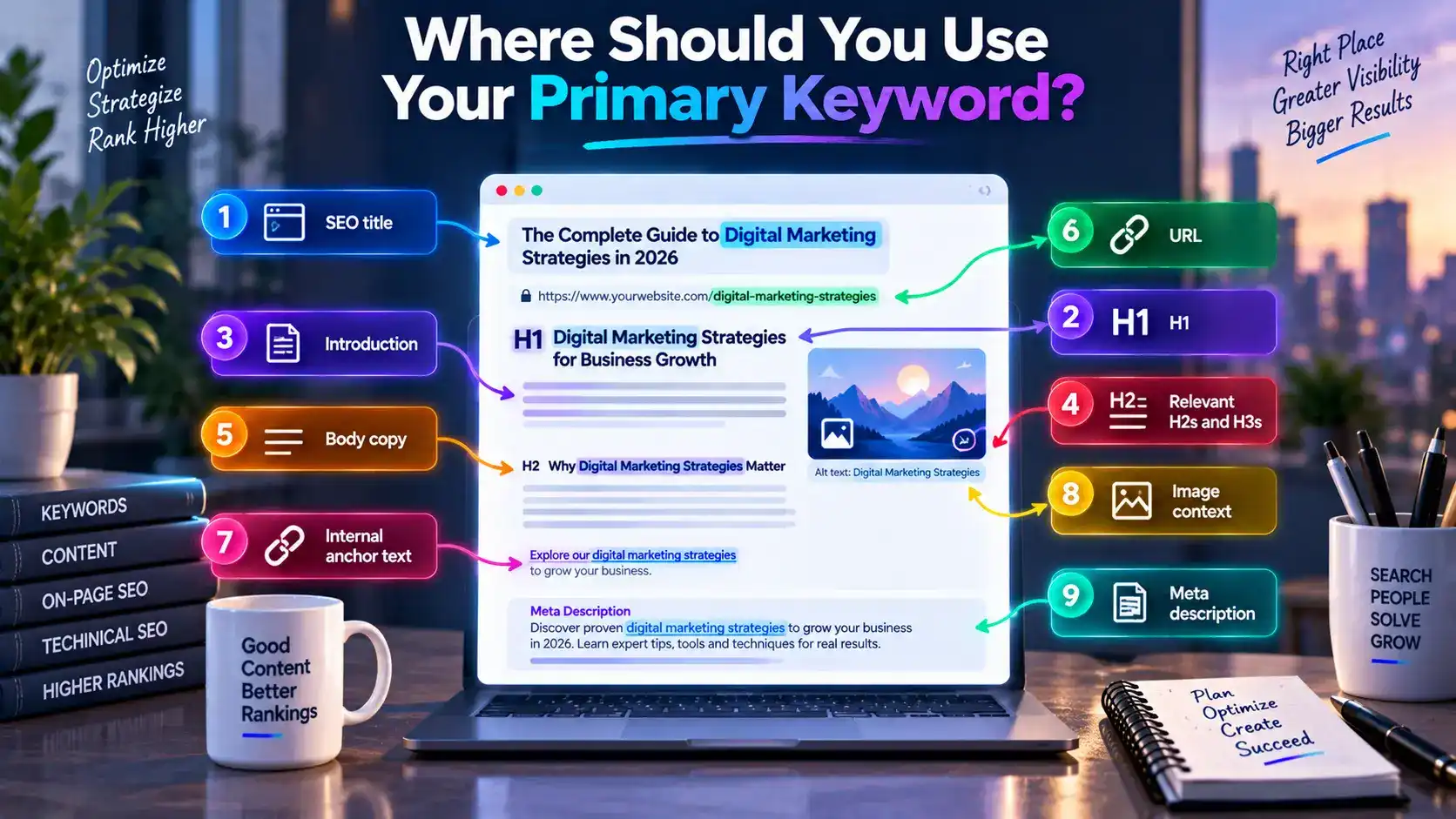
Avoiding keyword stuffing doesn’t mean hiding the topic from Google.
Make the subject of the page obvious.
When appropriate, the primary topic can naturally appear in:
Make the page’s subject immediately clear.
The main heading should accurately describe the page.
Establish the subject early.
Use the keyword where natural—but don’t force every heading to contain it.
Use natural terminology.
Keep it descriptive and concise when creating a new URL.
Use descriptive anchor text where it helps users understand the destination.
Use accurate filenames and alt text when relevant to the image rather than stuffing keywords.
Write for the click and accurately summarize the page.
Google specifically warns against keyword-stuffed titles and says repeatedly using the same words or phrases doesn’t help users and can make a result appear spammy.
This is one of the easiest signs of over-optimized SEO content.
Suppose your target keyword is:
AI Overview optimization
You don’t need:
What Is AI Overview Optimization?
Why Is AI Overview Optimization Important?
How Does AI Overview Optimization Work?
AI Overview Optimization Benefits
AI Overview Optimization Strategies
AI Overview Optimization Best Practices
AI Overview Optimization FAQs
Technically, the topic is extremely obvious.
Editorially, it’s painful.
Instead:
What Are Google AI Overviews?
Why Traditional SEO Alone May Not Be Enough
Start With the Questions Your Customers Ask
Structure Important Answers Clearly
Build Topical Authority Around the Subject
Demonstrate First-Hand Expertise
Measure AI Citations Alongside Organic Performance
The content still has a clear theme.
But it reads naturally.
Semantic SEO is one of the most useful concepts here.
Instead of thinking:
keyword → repetition
think:
topic → entities → concepts → relationships → questions
Take:
HVAC repair
A semantically comprehensive page may naturally discuss:
You don’t need to artificially insert these terms.
If you’re genuinely explaining HVAC repair comprehensively, many of them will appear naturally.
That’s the point.
Entity optimization is sometimes misunderstood as another version of keyword stuffing.
It’s not.
An entity is a distinct concept that search systems can understand in context.
For example, content about digital marketing might naturally reference concepts such as:
But don’t turn this into:
“We need 47 entities on this page because an SEO tool gave us a score of 72.”
That’s just keyword stuffing with a newer vocabulary.
Include entities because they’re necessary to explain the subject.
One of the most effective content-structuring principles for question-based search is simple:
Answer first. Explain second.
Imagine the heading:
A weak answer:
Search engine optimization has become an increasingly important component of the modern digital marketing ecosystem, and companies across industries are investing more resources into organic search…
We’ve already lost the reader.
A stronger answer:
SEO commonly takes several months to produce meaningful results, but the timeline varies based on competition, website authority, technical condition, content quality, and the scope of the campaign.
Then expand.
Explain:
The reader gets an immediate answer and still has the option to learn more.
AI-assisted search makes follow-up questions particularly important.
Suppose someone asks:
How much does SEO cost?
After receiving an answer, they may naturally ask:
Why do SEO prices vary?
Then:
Is $500 per month enough?
Then:
What should an SEO retainer include?
Then:
How do I know whether my SEO agency is delivering results?
Then:
How long should I work with an SEO agency?
These aren’t five unrelated keywords.
They’re one decision journey.
Strong content anticipates that journey.
This is where question research becomes more valuable than simply expanding a keyword list.
Older SEO practices often encouraged creating sections around slight variations.
For example:
These aren’t necessarily different user needs.
Creating separate sections for each variation can produce repetitive content.
Instead, consolidate variations when the search intent is the same.
Create separate sections or pages when the intent is genuinely different.
This reduces duplication and improves content quality.
If you have 50 relevant questions around one topic, don’t automatically force all 50 onto one URL.
Sometimes the better approach is to build a topic cluster.
For example:
SEO Services
What Is SEO?
How Much Does SEO Cost?
How Long Does SEO Take?
SEO vs. PPC
How to Choose an SEO Agency
Technical SEO Checklist
What Is AEO?
What Is GEO?
How to Optimize for Google AI Overviews
Then connect those resources through internal linking.
Now the website develops broader topical coverage without creating one enormous page stuffed with every conceivable keyword.
Internal links help users discover related information and help establish relationships between pages.
For example:
How to Optimize for AI Overviews
could naturally link to:
What Is AEO?
which could link to:
SEO vs. AEO vs. GEO
which could connect to:
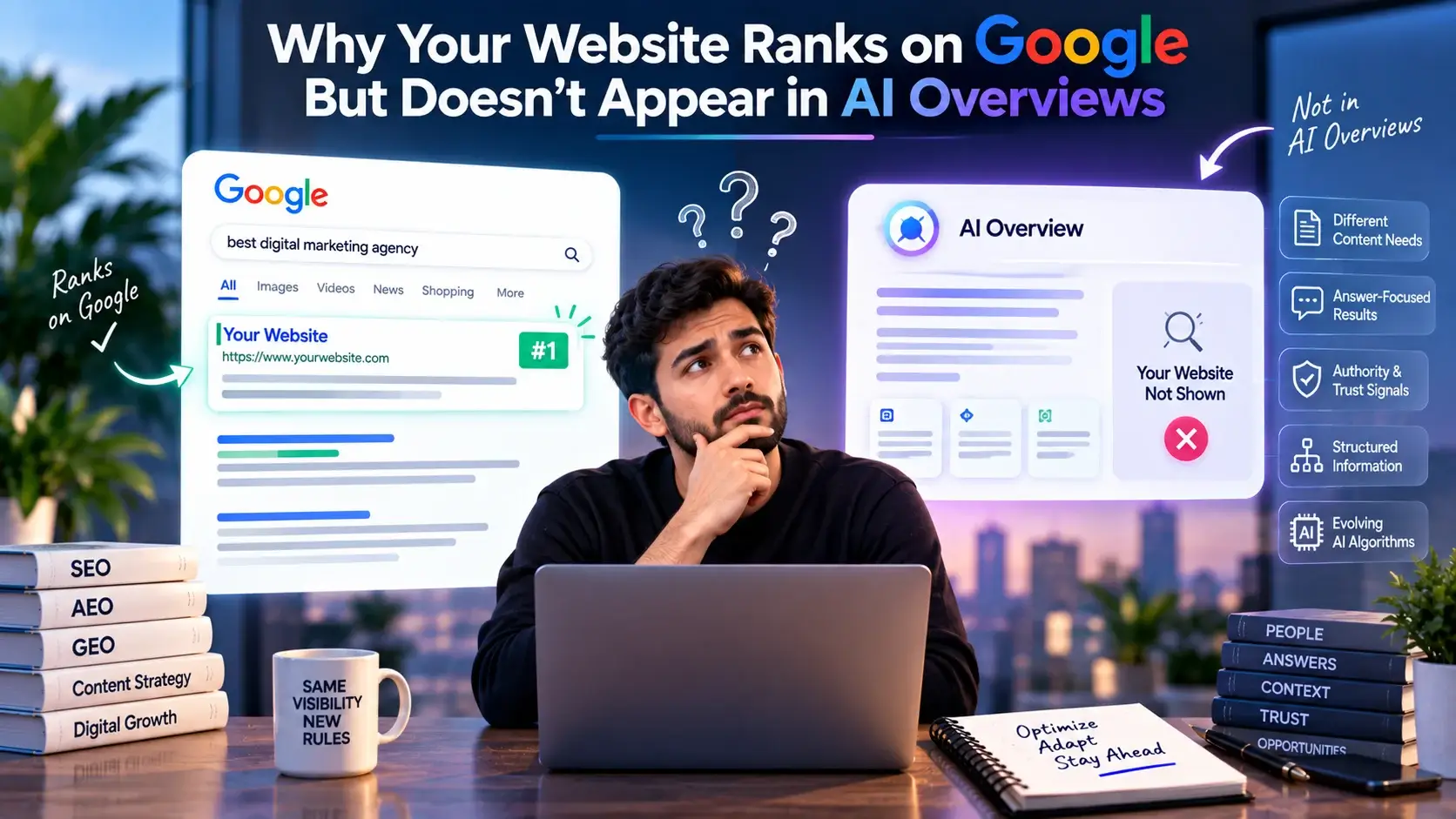
Why Your Website Ranks on Google But Doesn’t Appear in AI Overviews
This creates an interconnected information architecture.
The goal isn’t:
“We need exactly six internal links per article.”
The goal is:
“What related resource would genuinely help the reader at this point?”
This is one of the biggest opportunities businesses have.
Anyone can publish:
“Creating helpful content can improve SEO performance.”
That’s generic.
But an experienced SEO professional can explain:
“When auditing a page that ranks organically but isn’t being surfaced for question-based searches, I first compare the user’s actual question with what the page answers. Often the problem isn’t the keyword—it is missing context, related questions, or insufficiently clear answers.”
That’s experience.
Similarly, businesses can include:
These elements make content harder to commoditize.
Google’s 2026 AI-search documentation update specifically highlighted the importance of providing non-commodity content when optimizing for generative AI features.
Our work with Berks Plumbing & HVAC Specialist provides a practical example of why question-focused optimization can outperform simply increasing keyword usage.
Potential plumbing and HVAC customers don’t always begin their journey by searching:
“plumber”
or:
“HVAC company.”
They search for problems.
For example:
Those questions reveal what customers actually need.
Our strategy focused on areas such as:
We weren’t trying to make every paragraph repeat an exact-match plumbing or HVAC keyword.
We were trying to build content around customer problems and information needs.
The campaign produced increased visibility for question-based searches and featured snippets and helped the website appear in Google AI Overview answers.
Based on our campaign results, the client also achieved approximately:
10× growth in traffic
and
more than 2× lead generation.
The important takeaway isn’t that question-based content guarantees those results for every website.
It’s that understanding the questions behind keywords can create search opportunities that keyword repetition alone cannot.
The campaign reinforced several principles I use when thinking about SEO and AI-search content.
Search intent matters more than repetition
Customers search for solutions, not keyword-density scores.
Informational content can generate commercial value
Someone asking why their furnace isn’t working may need an HVAC professional shortly afterward.
Questions expose hidden search opportunities
Service-keyword research doesn’t capture the entire customer journey.
One content strategy can support multiple search surfaces
Well-developed content can potentially contribute to organic rankings, question-based visibility, featured snippets, AI Overview citations, traffic, and conversions.
Leads matter more than citations
AI Overview visibility is useful.
But a citation isn’t the final business objective.
The objective is to turn visibility into:
Traffic → Qualified Leads → Customers → Revenue
Suppose you’re explaining:
How to choose an SEO agency.
Instead of repeating “SEO agency” five more times, add a practical example:
Imagine two agencies. Agency A promises first-page rankings within 30 days but provides no explanation of its strategy. Agency B begins with a technical audit, competitor analysis, search-intent research, content roadmap, and measurable KPIs. The second proposal gives the business significantly more information for evaluating how the work will actually be performed.
That paragraph creates value without relying on keyword repetition.
Examples help users understand abstract ideas.
They also demonstrate that the author understands how the concept works in practice.
Original data can differentiate content significantly.
For example, a digital marketing agency could analyze:
Instead of writing:
“AI search is changing SEO.”
you might eventually be able to say:
“Across 50 client queries we monitored, X% triggered AI Overviews during the study period.”
That’s original information.
But don’t invent data simply to make content look authoritative.
If the research hasn’t been conducted, don’t present estimates as proprietary findings.
This deserves special attention.
SEO tools often recommend related terms.
These can be useful for identifying missing concepts.
But they can also create a new problem.
A writer sees:
Primary keyword: Healthcare staffing
Related terms:
Then tries to insert every phrase into every section.
That’s still stuffing.
It simply uses related keywords instead of one exact-match keyword.
Use semantic terms when they improve meaning.
Don’t use them simply because software gave you a checklist.
AEO has created another bad habit:
question stuffing.
Someone hears:
“AI Overviews answer questions.”
So they add 40 FAQs to every article.
That’s not necessarily helpful.
Suppose a page about:
Commercial HVAC Maintenance
ends with:
Those questions may have little relevance to the page’s actual audience or intent.
The correct question isn’t:
“How many FAQs can we add?”
It’s:
“What unanswered questions could prevent this user from understanding the topic or taking the next step?”
That’s a much stronger AEO framework.
Structured data should accurately represent the visible content and be used where appropriate.
But adding markup should not be treated as a shortcut to AI Overview inclusion.
In fact, Google deprecated its FAQ rich result feature in Search in May 2026.
That doesn’t mean questions and answers stopped being useful.
It means businesses should separate two concepts:
FAQ content can be useful to users.
FAQ markup is not a magic AI-visibility button.
Write the question because the customer needs the answer—not because you’re chasing a SERP feature.
This is another area where marketing hype can get ahead of evidence.
Google updated its AI optimization guidance in June 2026 specifically to clarify its position on llms.txt. (Google for Developers)
For Google Search, businesses shouldn’t treat llms.txt as a replacement for fundamentals such as:
An AI-related file won’t compensate for a weak website.
AI tools make content production dramatically faster.
But faster publishing doesn’t automatically mean better SEO.
Google’s spam policies specifically identify scaled content abuse as creating large amounts of low-value or unoriginal content primarily to manipulate search rankings, regardless of whether it was created by AI, humans, or a combination of both.
The problem isn’t simply using AI.
The problem is producing content at scale without adding meaningful value.
AI can be extremely useful for:
But your final content still needs:
Publishing 500 generic articles doesn’t automatically create topical authority.
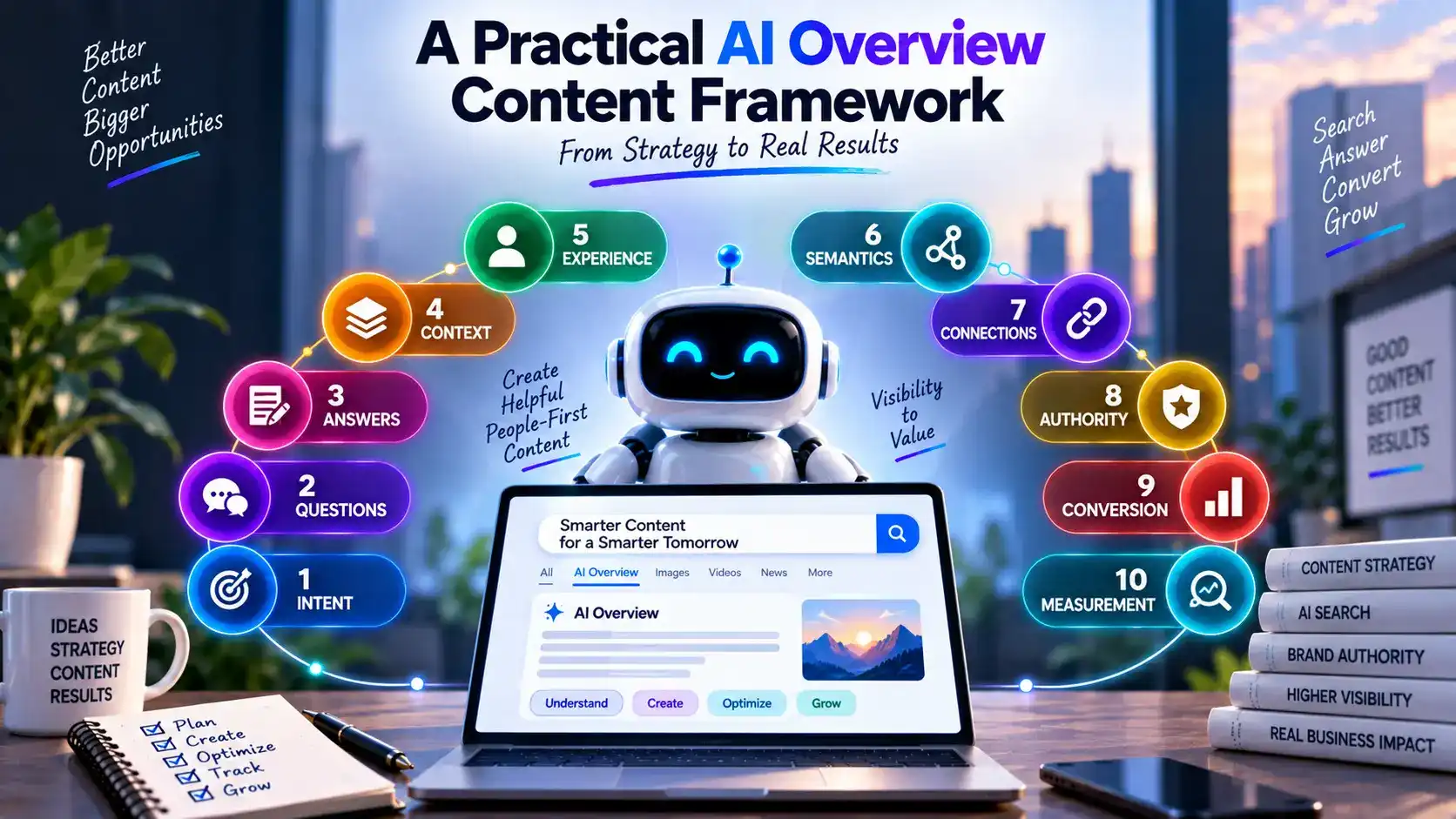
At MetaSense Marketing, I would approach AI-search content through a framework like this:
Identify what the searcher actually wants.
Ask:
Map the questions surrounding that intent.
Identify:
Give direct, accurate answers.
Don’t hide the answer behind unnecessary introductions.
Explain the answer.
Add:
Demonstrate real expertise.
Include:
Cover the concepts and entities genuinely related to the subject.
Don’t force them.
Use internal links to connect related information.
Support claims and strengthen the broader credibility of the brand.
Help the user determine what to do next.
Measure more than rankings.
Track:
Notice what isn’t part of the framework:
“Repeat the primary keyword 27 times.”
If an existing page is over-optimized, don’t automatically delete it.
Especially if it already ranks.
Use a structured re-optimization process.
Understand why the URL currently performs before changing it.
Read them in context.
If removing the keyword doesn’t change the meaning, consider removing it.
Prioritize clarity.
Replace repetitive keyword headings with descriptive or question-based headings.
Don’t explain the same idea three different ways simply to create additional keyword opportunities.
Add information the user genuinely needs.
Introduce examples, data, experience, case studies, or expert insight.
Connect relevant supporting resources.
Make sure the improved page still satisfies the query it already ranks for.
The goal isn’t to “de-optimize” the page.
It’s to replace mechanical optimization with meaningful optimization.
When reviewing content, I look for several warning signs:
The keyword sounds unnatural when you read the page aloud.
Almost every H2 contains the primary keyword.
Several paragraphs make essentially the same point.
Exact-match keywords appear where a pronoun or natural synonym would make more sense.
FAQs exist solely to create keyword variations.
Related terms have been inserted without adding meaning.
The introduction spends hundreds of words repeating the topic instead of answering the question.
Location names are repeated unnaturally.
The content sounds as though it was written for an SEO scoring tool rather than a customer.
If several of these are present, it’s time to rethink the page.
Suppose MetaSense Marketing is targeting:
Digital Marketing Agency in New Jersey
MetaSense Marketing is a digital marketing agency in New Jersey offering digital marketing services in New Jersey. If you’re looking for the best digital marketing agency in New Jersey, our New Jersey digital marketing agency can help your business.
The keyword is unmistakable.
So is the stuffing.
MetaSense Marketing helps businesses improve their online visibility and customer acquisition through SEO, paid search, content strategy, and other digital marketing services. Our approach connects search visibility with measurable outcomes such as qualified leads and conversions.
Now the content communicates:
The page title, H1, location information, service content, business information, and surrounding context can establish the geographic relevance without forcing “New Jersey” into every sentence.
Instead of giving your writer this:
Primary keyword: AI Overview optimization
Density: 2%
Secondary keywords: 15
Word count: 2,500
give them something like:
Primary audience: U.S. businesses investing in organic search
Primary question: How can businesses improve their chances of being visible in Google AI Overviews?
Search intent: Informational/commercial research
Questions to answer:
Experience to include:
Conversion objective:
Help qualified businesses understand when professional SEO/AEO/GEO support is appropriate.
That’s a content brief.
The first version is mostly a keyword checklist.
This is often presented as an either/or question.
It shouldn’t be.
Good SEO helps search engines understand content because the content is organized around what users need.
You still need:
But those elements should support the user experience rather than compete with it.
Google’s Search Essentials puts both ideas together: create people-first content while using the words people search for in prominent, descriptive places.
That’s the balance businesses should aim for.
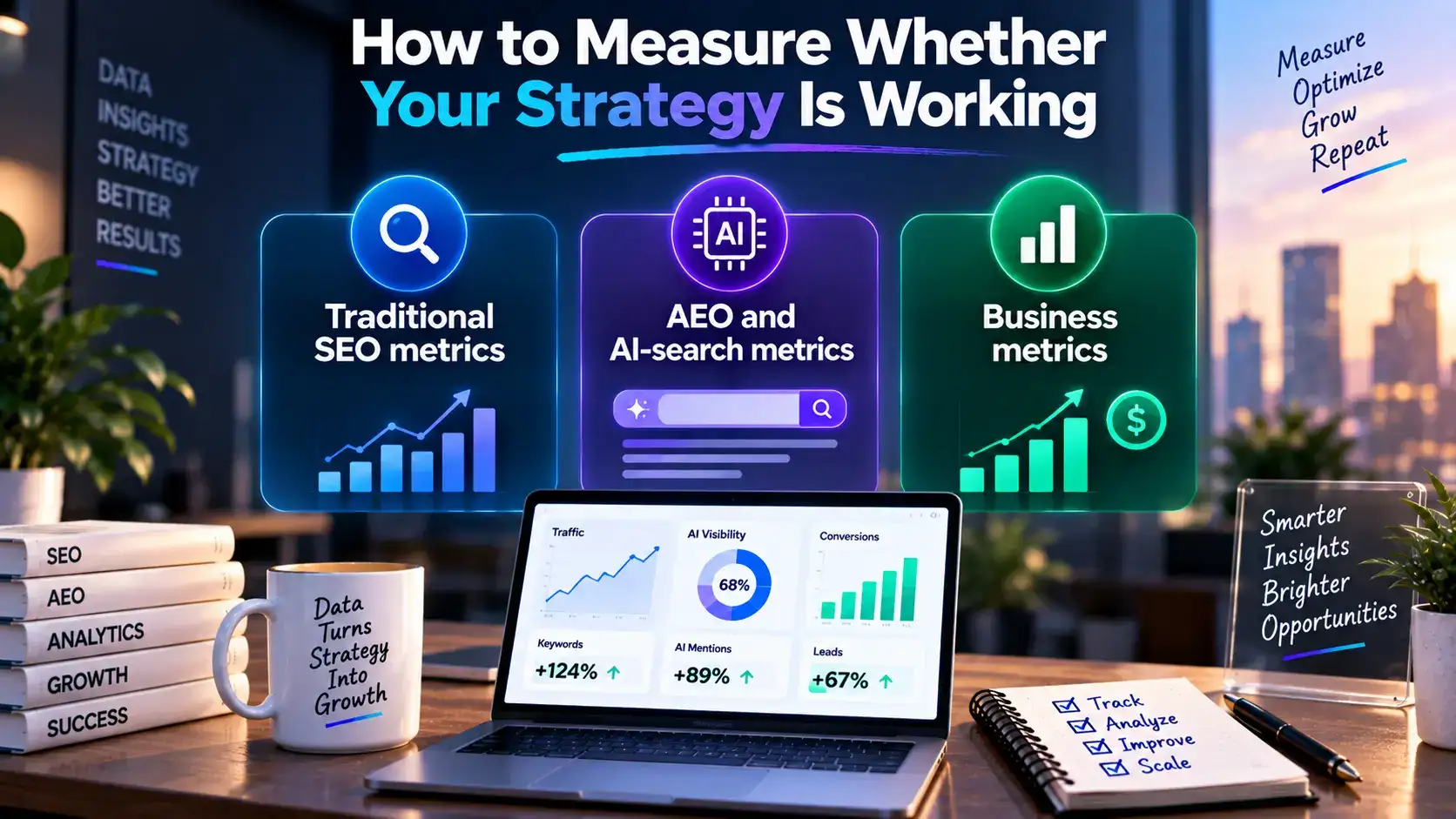
Don’t judge the strategy by asking:
“Did our keyword density go from 1.2% to 1.8%?”
Measure outcomes.
Track:
Track where possible:
Most importantly:
The last category matters most.
Optimization scores are diagnostic tools, not your audience.
There is no universal percentage that guarantees AI Overview visibility.
Use headings to organize information.
Answer questions that matter.
Related terms should add meaning.
Google’s scaled content policy focuses on low-value content created primarily to manipulate search, regardless of how it was produced.
AI search doesn’t remove the need for strong technical and content fundamentals.
An AI citation that never contributes to a meaningful business outcome shouldn’t become the only definition of success.
The biggest change businesses need to make isn’t abandoning keywords.
It’s putting keywords in their proper place.
Keywords tell us how people search.
Questions tell us what people need.
Search intent tells us why they need it.
Semantic relationships tell us what else belongs in the conversation.
Expertise tells users why they should trust us.
Original information gives search systems and users something worth discovering.
And business results tell us whether the strategy actually worked.
So instead of asking:
“How many times should I use my target keyword to appear in an AI Overview?”
ask:
“Have we created one of the most useful resources available for the question this person is asking?”
That’s the question I would rather optimize around.
At MetaSense Marketing, our SEO, AEO, and GEO approach combines traditional search fundamentals with question research, content restructuring, semantic optimization, topical authority, internal linking, first-hand expertise, and AI-search visibility.
The objective isn’t to stuff more keywords into your website.
It’s to make your business easier to discover, easier to understand, and more valuable to the people searching for what you offer.
If your content ranks but isn’t gaining the visibility you expect from AI Overviews, MetaSense Marketing can help identify where the gap exists and develop an integrated SEO, AEO, and GEO strategy focused on visibility, qualified traffic, leads, and measurable business growth.
Start with search intent and the questions users are asking. Provide direct answers, useful supporting context, strong topical coverage, clear structure, first-hand expertise, original information, and relevant internal links. Continue following established SEO fundamentals.
Yes. Keywords remain valuable for understanding search demand and user language. Use them naturally rather than repeatedly inserting exact-match phrases.
There is no universal keyword-density percentage that guarantees AI Overview visibility. Focus on natural language, relevance, intent, and topical completeness.
It can. Google explicitly identifies keyword stuffing as a spam practice when words or phrases are repeated unnaturally in an attempt to manipulate rankings.
When it naturally and accurately describes the page, including the primary topic in the H1 is useful. Don’t force exact-match wording if it creates an awkward heading.
No. Headings should organize information and help readers understand what each section covers.
Questions and answers can be valuable when they address genuine user needs. However, adding large numbers of irrelevant FAQs isn’t an AI Overview optimization strategy.
No. Structured data should be used appropriately, but it doesn’t guarantee AI Overview inclusion. Google also deprecated the FAQ rich result feature in May 2026.
Don’t treat llms.txt as a substitute for established SEO fundamentals. Google specifically clarified its guidance concerning llms.txt in its AI optimization documentation in June 2026.
They work together. Keywords help identify user language and demand, while semantic optimization helps ensure the content comprehensively covers the concepts and relationships surrounding the topic.
Not automatically. Content should be as comprehensive as necessary to satisfy the user’s intent without adding unnecessary filler.
Using AI isn’t inherently the issue. Google focuses on whether content is useful and whether it is being produced primarily to manipulate search rankings. Scaled production of low-value, unoriginal content can violate Google’s spam policies.
Read it aloud. Look for repeated exact-match phrases, unnatural sentences, repetitive headings, unnecessary keyword variations, excessive FAQs, and sections that exist mainly to insert keywords.
Preserve the URL and important search intent, analyze what already performs, remove only unnecessary repetition, improve clarity, fill genuine content gaps, add original expertise, strengthen internal links, and monitor performance after the update.