“How long will it take to see results?”
It is one of the first questions almost every business owner asks before investing in digital marketing.
And it’s a fair question.
If you’re investing thousands of dollars into marketing, you want to know when that investment is going to start producing something meaningful.
The problem is that there is no honest answer like:
“Digital marketing takes exactly 90 days.”
Different channels work at different speeds. A new website competing nationally for difficult keywords will have a very different timeline from an established local business optimizing its Google Business Profile. A Google Ads campaign can begin generating visibility much faster than SEO, while SEO can potentially create organic value that continues long after the initial work.
At MetaSense Marketing, we approach the question differently.
Instead of asking only “How many days until we get results?”, we ask:
“What should we be seeing at each stage, and are those improvements moving the business toward more qualified leads, customers, revenue, and ROI?”
That distinction matters.
Digital marketing is not a light switch that suddenly turns on after 90 days. It’s a process of research, implementation, measurement, learning, and optimization.
In this guide, I’ll explain realistic digital marketing timelines for U.S. businesses, what you should expect during the first 30, 60, 90, 180, and 365 days, why some campaigns move faster than others, and how to tell whether your marketing is actually working.
If you need a simple benchmark:
| Digital Marketing Channel | Initial Signals | Meaningful Results |
| Google Ads | Days to weeks | Weeks to months |
| Local SEO | 1–3 months | 3–6+ months |
| SEO | 1–3 months | 3–6+ months |
| Content Marketing | 2–4 months | 4–12+ months |
| Social Media | Weeks to months | 3–6+ months |
| AEO | Variable | Depends on search visibility and content |
| GEO | Variable | Depends on brand authority and AI-search behavior |
These are planning ranges, not guarantees.
A campaign can move faster.
It can also take longer.
The timeline depends on factors such as:
That’s why a responsible digital marketing agency should never promise that every business will achieve a particular result on an exact date.
Before discussing timelines, we need to define the word results.
This is where businesses and agencies can sometimes misunderstand each other.
A business owner might mean:
“I want more customers.”
An SEO specialist might initially measure:
“Your organic impressions increased.”
Both can be correct.
But they aren’t the same thing.
Early marketing indicators
These can include:
These metrics help determine whether the campaign is gaining traction.
Meaningful business results
Ultimately, businesses need to measure:
The progression I use is:
Visibility → Traffic → Conversion → Lead → Customer → Revenue
A ranking is useful.
A relevant website visitor is better.
A qualified lead is better still.
A customer generating revenue is the ultimate objective.
Two businesses can invest the same amount of money into SEO and experience completely different results.
Imagine two companies.
Even if both companies spend the same amount on SEO, their timelines will likely be very different.
That’s why I don’t like statements such as:
“SEO always takes six months.”
That’s too simplistic.
A better statement is:
“SEO timelines depend on the starting point, competition, resources, execution, and the specific opportunities being targeted.”
SEO generally requires more patience than paid advertising.
For many U.S. businesses, I would use 3–6 months as a reasonable planning window for meaningful early traction, with stronger results potentially developing over 6–12 months and beyond.
But SEO doesn’t mean nothing happens before month three.
During the first few months, we may see:
The campaign is building momentum.
The first month is often less about generating massive traffic and more about understanding what needs to change.
A strong SEO campaign may begin with:
Then we start fixing the most important issues.
What should you expect?
Potential early indicators include:
Don’t judge an SEO campaign purely on traffic after 30 days.
At this stage, you’re building the foundation.
Once foundational work is implemented, we can begin seeing more movement.
Potential indicators include:
Some businesses will see faster improvements.
Others won’t.
That’s where competitive analysis and ongoing measurement become important.
This is where I would expect many established campaigns to have enough data to evaluate whether the strategy is moving in the right direction.
We can analyze:
Then we adjust.
SEO should not be:
Implement → Wait → Hope
It should be:
Implement → Measure → Learn → Optimize → Expand
By this point, a well-executed campaign may have accumulated:
This is one reason SEO can become increasingly valuable over time.
You aren’t starting from zero every month.
You’re building on previous work.
For local businesses, Local SEO can produce meaningful opportunities within a few months, although the timeline varies considerably by location and competition.
Local SEO may involve:
Google explains that local search results are primarily influenced by relevance, distance, and prominence. It also recommends complete and accurate Business Profile information and explains that reviews can contribute to local prominence.
Focus on:
Build:
Measure:
Again, there is no guaranteed timeline.
A business competing in a small market can have a very different experience from one competing in a major U.S. metropolitan area.
Google Ads is fundamentally different from SEO.
With Google Ads, a business can potentially begin receiving visibility much faster after campaigns are properly configured.
This makes paid search particularly useful for:
For example, an emergency plumber doesn’t necessarily have months to wait for organic rankings.
Someone searching:
“Emergency plumber near me”
may need a provider immediately.
Google Ads can help businesses compete for that demand quickly.
But there’s a major distinction:
Fast visibility does not automatically equal profitable results.
A campaign still needs:
The objective isn’t simply clicks.
It’s qualified customers at an acceptable acquisition cost.
Focus on:
Start analyzing:
Optimize:
Some campaigns can generate leads very quickly.
But the first few weeks should also be treated as a learning period.
The answer is simple:
Google Ads generally produces visibility faster.
SEO generally takes longer.
But the comparison doesn’t end there.
Strength: Speed
You can pay for visibility when customers are actively searching.
Strength: Long-term organic value
Successful organic visibility can continue generating traffic and leads without paying Google directly for every organic click.
That’s why I generally don’t recommend thinking:
SEO or Google Ads.
Instead:
SEO for long-term growth + Google Ads for immediate demand capture.
Content marketing typically requires time because individual pieces of content need to:
A blog post published today isn’t automatically going to generate hundreds of qualified visitors tomorrow.
A realistic planning window can be:
2–4 months for early visibility
and
4–12+ months for stronger cumulative results
But this varies substantially.
Content may gain traction more quickly when:
This is why I don’t believe in simply publishing “more blogs.”
I’d rather publish the right content for the right customer at the right stage of the buying journey.
Social media operates differently from search.
A post can potentially generate visibility immediately.
But building a consistent audience and turning social visibility into predictable business results generally takes longer.
Businesses may see early:
But meaningful outcomes such as:
can take several months to establish consistently.
The timeline also depends heavily on:
A local restaurant and a B2B technology company should not have the same social-media strategy.
Answer Engine Optimization, or AEO, focuses on making content useful for answer-oriented search experiences.
The objective is to provide clear answers to the questions your audience is asking.
For example:
“How much does HVAC repair cost?”
“How often should I service my AC?”
“How do I choose an SEO agency?”
AEO can involve:
The timeline isn’t as straightforward as traditional keyword ranking.
Visibility in answer-driven experiences can depend on:
So I wouldn’t promise:
“You’ll appear in AI answers in 30 days.”
Instead, build content that deserves to be cited.
Generative Engine Optimization, or GEO, focuses on improving a brand’s visibility across generative AI search experiences.
This can involve:
GEO is particularly difficult to put on an exact timeline because generative search experiences are evolving.
The better approach is to build the underlying assets that make a brand more discoverable, understandable, authoritative, and reference-worthy.
Several factors can accelerate progress.
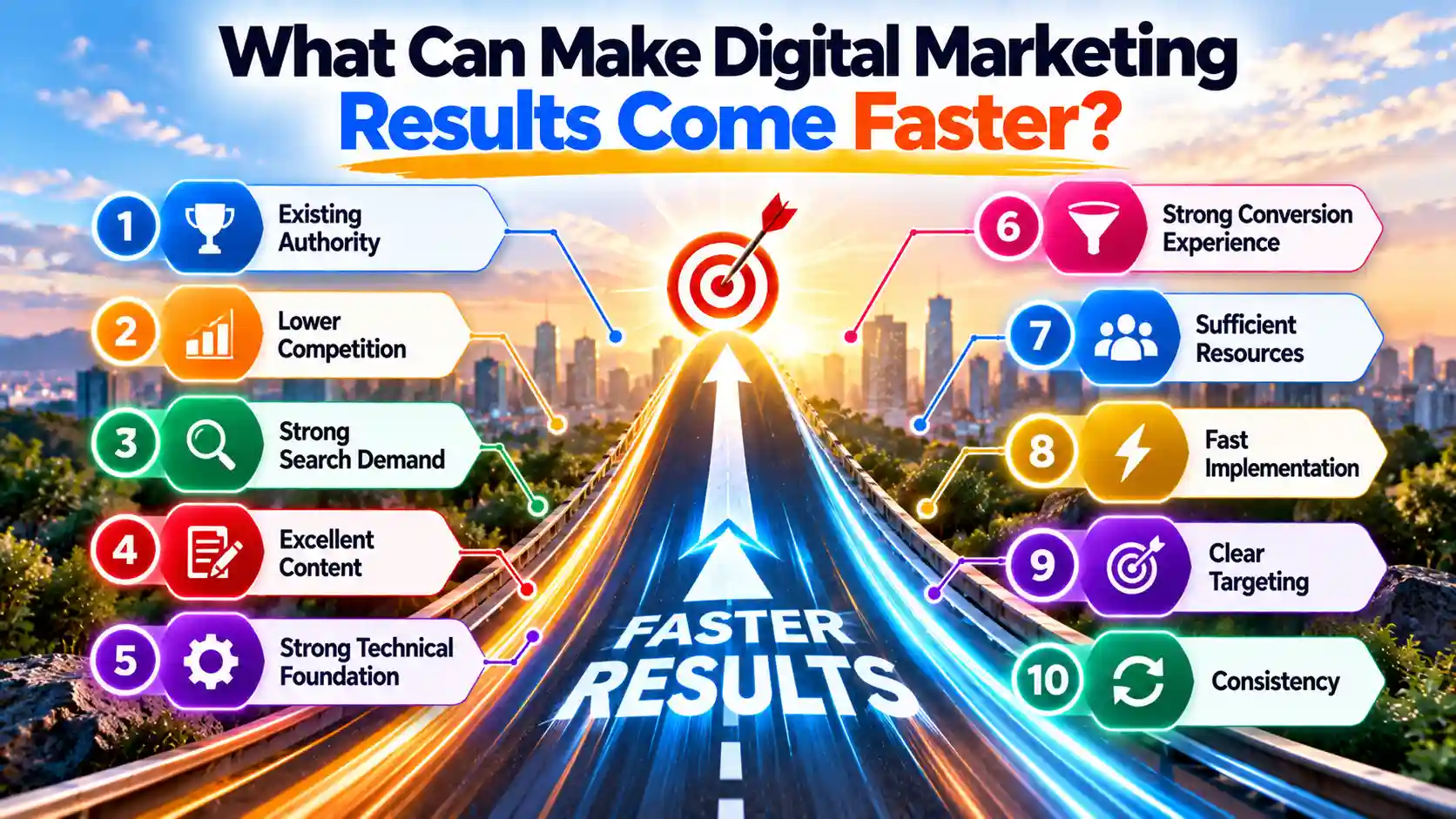
1. Existing Authority
An established website with relevant authority has an advantage.
2. Lower Competition
If competitors aren’t investing heavily, opportunities may be easier to capture.
3. Strong Search Demand
If customers are actively searching for your services, there are more opportunities to capture.
4. Excellent Content
Useful content can outperform generic content.
5. Strong Technical Foundation
Search engines need to be able to crawl and understand the website.
6. Strong Conversion Experience
Traffic needs somewhere useful to go.
7. Sufficient Resources
Competitive markets require sufficient investment.
8. Fast Implementation
A great strategy sitting in a presentation isn’t going to generate results.
It needs to be implemented.
9. Clear Targeting
Targeting the right audience and search intent reduces wasted effort.
10. Consistency
Digital marketing works better as an ongoing process than as a one-time project.
The same principle works in reverse.
Results may take longer when a business has:
One of the biggest problems I see is that businesses sometimes blame the marketing channel when the actual problem is somewhere else.
For example:
Low leads
may not mean:
“SEO doesn’t work.”
It could mean:
The website doesn’t convert.
Or:
The traffic is irrelevant.
Or:
The wrong keywords were targeted.
Or:
The lead form isn’t working.
That’s why diagnosis matters.
One of the biggest misconceptions about SEO is:
“If we don’t double traffic in 30 days, nothing happened.”
That’s not how serious SEO works.
The first month can establish:
It’s like building the foundation of a house.
You don’t look at the foundation after two weeks and say:
“Where are the bedrooms?”
The foundation enables everything that comes next.
I recommend thinking in three stages.
Business
Website
Search
Measurement
Start executing:
For appropriate businesses, paid campaigns can be launched or refined during this period.
Analyze:
Then decide:
What’s working?
What’s not?
What should we scale?
What should we change?
At this stage, the campaign should move beyond basic setup.
We can begin expanding:
We can also identify which topics and services are actually producing business value.
For example:
Maybe one service generates 60% of qualified leads.
That service deserves additional attention.
Maybe one location converts twice as well as another.
That should influence investment.
This is where SEO becomes a business strategy rather than simply a ranking exercise.
Now we’re looking for cumulative growth.
Potential outcomes include:
The exact outcome depends on the business.
But by this stage, there should generally be enough data to make much stronger strategic decisions.
Our work with Berks Plumbing & HVAC Specialist illustrates why digital marketing timelines should be evaluated through progression rather than arbitrary deadlines.
The campaign focused on understanding the questions and problems potential customers were searching for.
We worked around areas including:
The campaign contributed to:
Approximately 10× Traffic Growth
and
More Than 2× Lead Generation
The website also gained visibility for:
The important takeaway isn’t simply that traffic increased.
The campaign connected search behavior to business outcomes.
A potential customer might begin with:
“Why isn’t my AC cooling?”
Then:
“How much does AC repair cost?”
Then:
“HVAC repair company near me.”
A strong digital marketing strategy can support that entire journey.
This case also demonstrates why content optimization isn’t simply about publishing more pages.
It’s about answering the questions that matter.
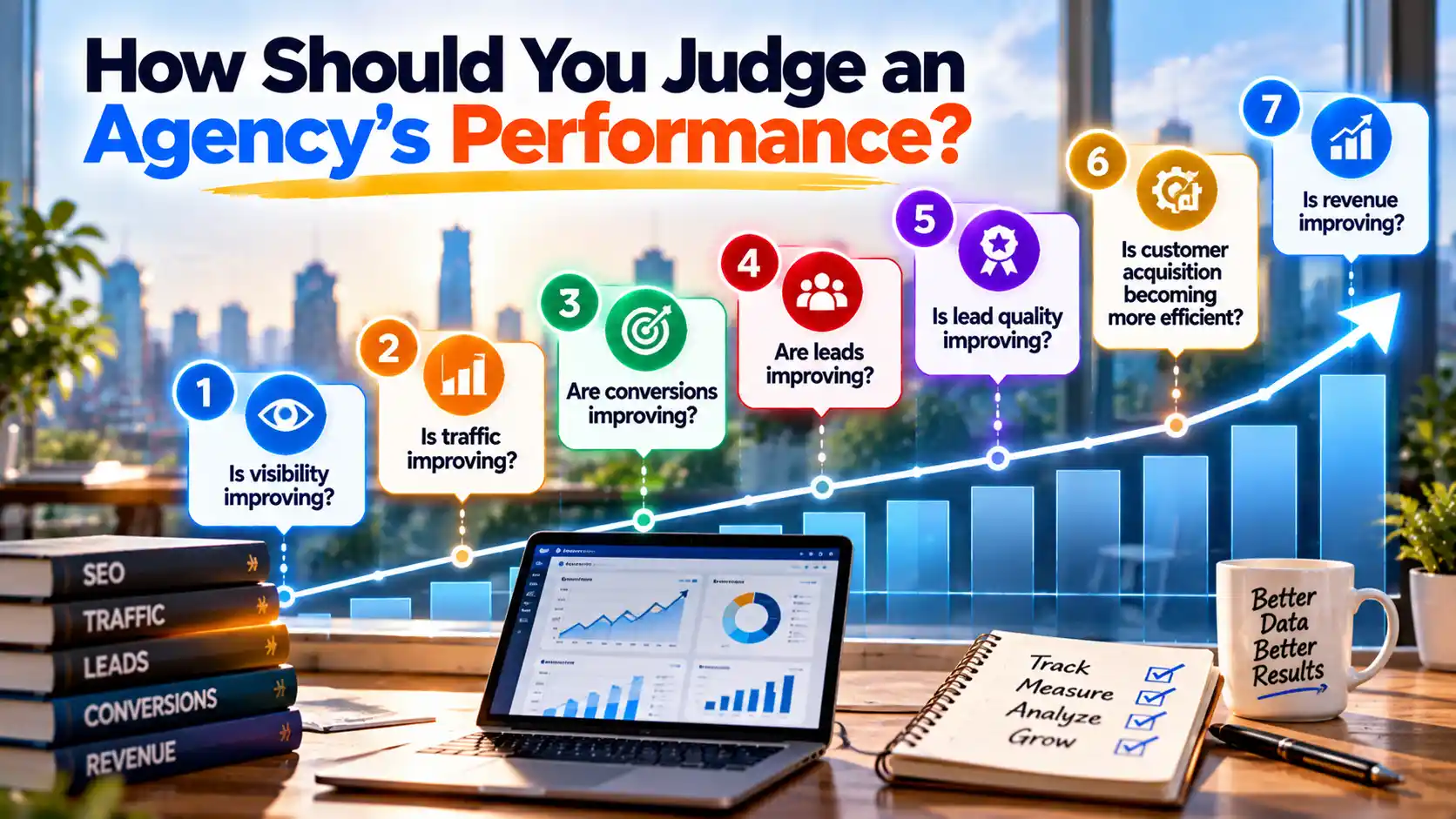
If you’re three months into a campaign, don’t ask only:
“Are we #1 yet?”
Ask:
1. Is visibility improving?
Are impressions and relevant rankings increasing?
2. Is traffic improving?
Are qualified users reaching the website?
3. Are conversions improving?
Are more visitors taking meaningful actions?
4. Are leads improving?
Are we generating more inquiries?
5. Is lead quality improving?
Are those inquiries actually potential customers?
6. Is customer acquisition becoming more efficient?
Are we acquiring customers at an acceptable cost?
7. Is revenue improving?
Ultimately, this is the most important question.
Imagine your website traffic grows:
10,000 → 20,000 monthly visitors
That’s a 100% increase.
Sounds great.
But suppose leads remain:
50 → 50
Then the marketing strategy hasn’t necessarily improved from a business perspective.
Now imagine traffic grows:
10,000 → 14,000
while leads grow:
50 → 120
That’s only a 40% traffic increase but a 140% increase in leads.
Which outcome would you prefer?
Obviously, the second.
That’s why I emphasize:
Don’t optimize digital marketing for traffic alone. Optimize it for qualified business outcomes.
One of the biggest mistakes is applying an SEO timeline to Google Ads.
Or a social-media timeline to SEO.
Or an AEO timeline to paid search.
Each channel operates differently.
Builds organic authority over time.
Buys targeted visibility quickly.
Builds geographic relevance and prominence.
Builds information assets and topical authority.
Builds audience and engagement.
Improves the usefulness and clarity of content for answer-driven discovery.
Builds visibility and authority across generative search experiences.
The strategy should account for these differences.
No.
This is another misconception.
I don’t recommend saying:
“SEO takes six months, so don’t ask us anything until then.”
You should be measuring progress continuously.
At every stage, we should know:
A six-month horizon doesn’t mean six months of silence.
It means six months of continuous measurement and optimization.
If a campaign isn’t producing the expected results, don’t immediately abandon it.
First diagnose the problem.
Ask:
Is the target audience correct?
Are we targeting the right search intent?
Is there enough demand?
Is the website converting?
Is the competition stronger than expected?
Are technical problems limiting visibility?
Is content quality strong enough?
Are changes being implemented quickly enough?
Is tracking accurate?
Is the budget appropriate for the market?
Once you identify the problem, you can change the strategy intelligently.
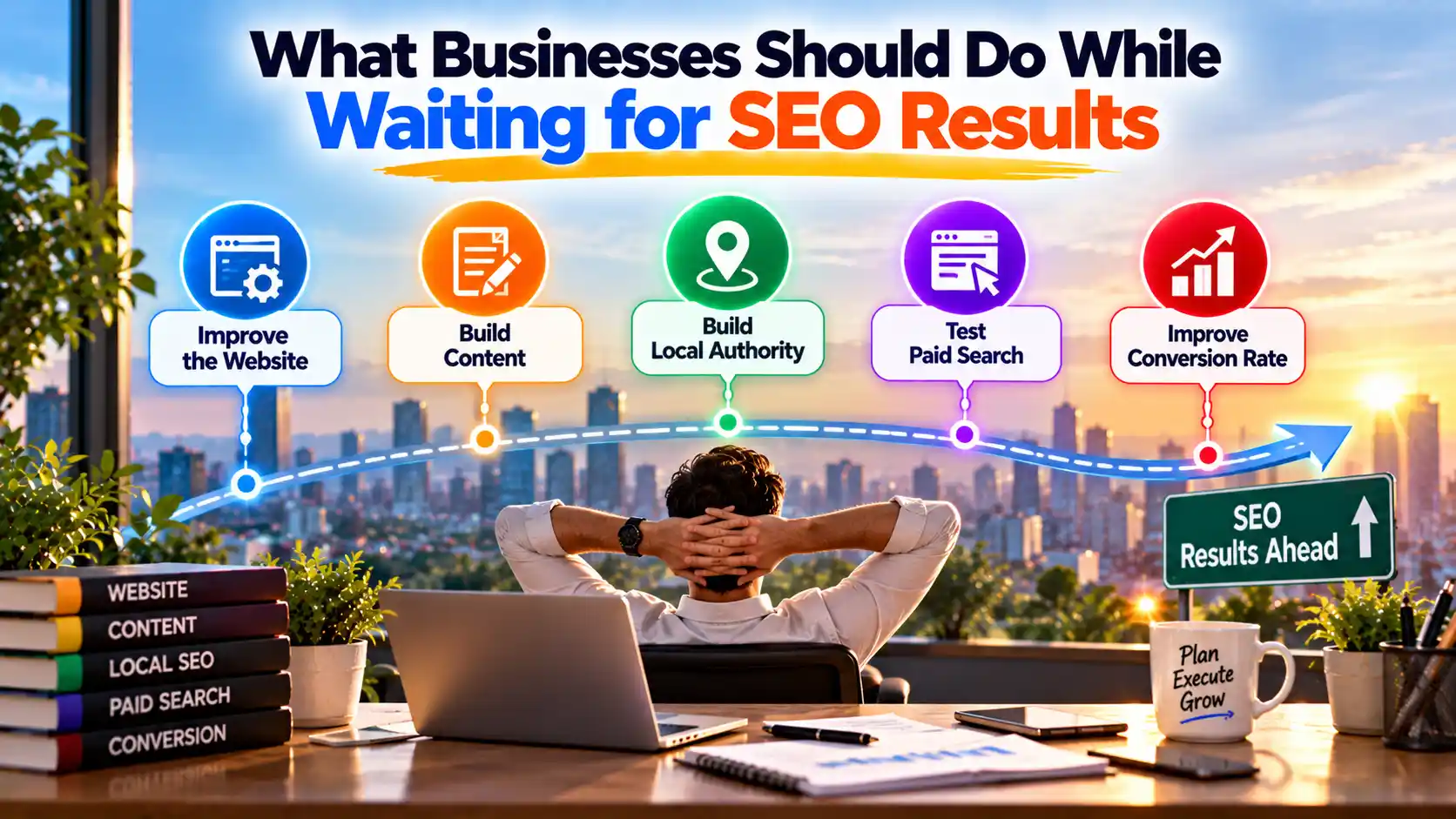
Don’t simply wait.
Use the time productively.
Fix:
Answer:
For local businesses:
Use Google Ads to:
If you’re generating traffic but not enough leads, improve:
This way, SEO isn’t operating in isolation.
The best way to think about digital marketing is not:
Month 1 = $X
Month 2 = $Y
Month 3 = $Z
Think:
Month 1: Build the foundation.
Month 2: Implement.
Month 3: Measure.
Month 4: Optimize.
Month 5: Expand.
Month 6: Strengthen.
Month 12: Scale.
Each stage should build on the previous one.
That’s how digital marketing can become a growth engine rather than a collection of disconnected activities.
Not every business can wait for SEO.
If you’re launching a new business and need leads now, consider combining:
Google Ads + SEO
Google Ads provides the short-term acquisition opportunity.
SEO builds the long-term foundation.
For example:
Month 1
Launch paid search while fixing the website and establishing SEO.
Month 2
Optimize paid campaigns and begin content/service-page expansion.
Month 3
Build local authority and organic visibility.
Months 4–6
Scale profitable paid campaigns while organic traffic develops.
Months 6–12
Use organic growth to diversify acquisition and improve overall marketing economics.
This approach can be much more practical than choosing one channel exclusively.
Examples:
Prioritize:
Local SEO + Google Business Profile + Service Pages + Reviews + Google Ads
Potentially faster opportunities may come from high-intent local searches and paid campaigns.
Longer-term growth comes from organic visibility and local authority.
Focus on:
Healthcare marketing requires particular attention to accuracy, expertise, trust, privacy and applicable regulations.
Examples:
Focus on:
Longer customer journeys make educational content particularly valuable.
A startup may need:
Paid acquisition for speed
combined with:
SEO for sustainable growth.
The startup should also test:
before scaling spend aggressively.
There’s no universal minimum.
But if you’re evaluating SEO, I would generally avoid judging the campaign solely after 30 or 60 days.
You need enough time for:
For many SEO campaigns, 6–12 months provides a much more meaningful evaluation window, particularly in competitive markets.
But that does not mean you should blindly commit for a year regardless of performance.
There should be measurable milestones along the way.
Ask:
“What should improve first?”
Maybe the answer is:
Month 1: Technical health.
Month 2: Impressions.
Month 3: Rankings.
Month 4: Organic traffic.
Month 5: Leads.
Month 6: Qualified customers.
That progression is much more realistic than:
“Pay us today and you’ll be #1 next month.”
If you take one thing away from this article, let it be this:
Digital marketing doesn’t have a universal finish line. It has stages of progress.
Google Ads can provide immediate visibility.
SEO can build sustainable organic visibility.
Local SEO can help businesses become more discoverable in their service areas.
Content can build topical authority.
AEO can help businesses answer the questions customers are asking.
GEO can help brands prepare for generative search experiences.
But none of these should be evaluated using a single arbitrary deadline.
At MetaSense Marketing, I believe the better approach is to establish clear milestones:
30 Days → Foundation
60 Days → Implementation
90 Days → Early Traction
3–6 Months → Meaningful Growth
6–12 Months → Compounding Visibility
12+ Months → Scale and Optimization
These aren’t guarantees. They’re a framework for understanding how a campaign can develop.
The real question isn’t:
“How quickly can you make us rank?”
It’s:
“Are we becoming more visible to the right people, generating more qualified opportunities, acquiring customers efficiently, and moving toward profitable growth?”
That’s the standard I would use to evaluate any digital marketing campaign.
And if a marketing agency can’t explain what should happen at each stage, how progress will be measured, and how the strategy will change based on the data, I’d think twice before signing the contract.
For U.S. businesses looking to build a digital marketing strategy across SEO, Local SEO, Google Ads, content optimization, AEO, GEO, and conversion optimization, MetaSense Marketing can help identify the right priorities based on your market, competition, customers, and growth objectives.
Don’t look for a marketing agency that promises a specific number of days to success. Look for one that knows what to do every day until success becomes measurable.
It depends on the channel and business. Google Ads can generate visibility quickly, while SEO and content marketing generally require several months to develop meaningful organic traction.
Many businesses can begin seeing early signals within 1–3 months, while meaningful results often develop over 3–6 months and continue building over 6–12 months or longer.
It can produce early improvements in indexing, impressions, rankings, and some traffic within 30 days, but substantial business results aren’t guaranteed within that timeframe.
Google Ads can begin generating visibility and clicks soon after a properly configured campaign launches. Lead and revenue performance depends on targeting, competition, ads, landing pages, conversion tracking, and offer quality.
Generally, yes. Google Ads can provide paid visibility much faster, while SEO requires time to establish organic visibility and authority.
Yes, when it is strategically aligned with business goals. SEO can create organic visibility and content assets that continue generating opportunities over time.
Local SEO can show early movement within a few months, but meaningful results depend on competition, location, website authority, Google Business Profile optimization, reviews, and other local signals.
Content can begin generating visibility within several months, but stronger cumulative results often require 4–12 months or longer, particularly in competitive industries.
There is no fixed timeline. AEO depends on content quality, authority, search demand, competition, query type, and how answer-oriented search experiences select and display information.
GEO does not have a universal timeline because generative search behavior and AI systems continue to evolve. Building authoritative content, brand mentions, expertise and relevant digital presence is a longer-term strategy.
Not automatically. First determine why results are slow. Review technical issues, competition, content, targeting, implementation, authority, conversion performance, and tracking before deciding whether the strategy needs to change.
For many businesses, yes. Google Ads can provide immediate visibility and data while SEO builds longer-term organic acquisition.
Track more than rankings. Look at organic traffic, impressions, conversions, qualified leads, calls, customers, and revenue where attribution is available.
Expecting immediate results from every channel. Different channels have different operating timelines, and results also depend heavily on competition, website quality, budget, implementation, and customer demand.